
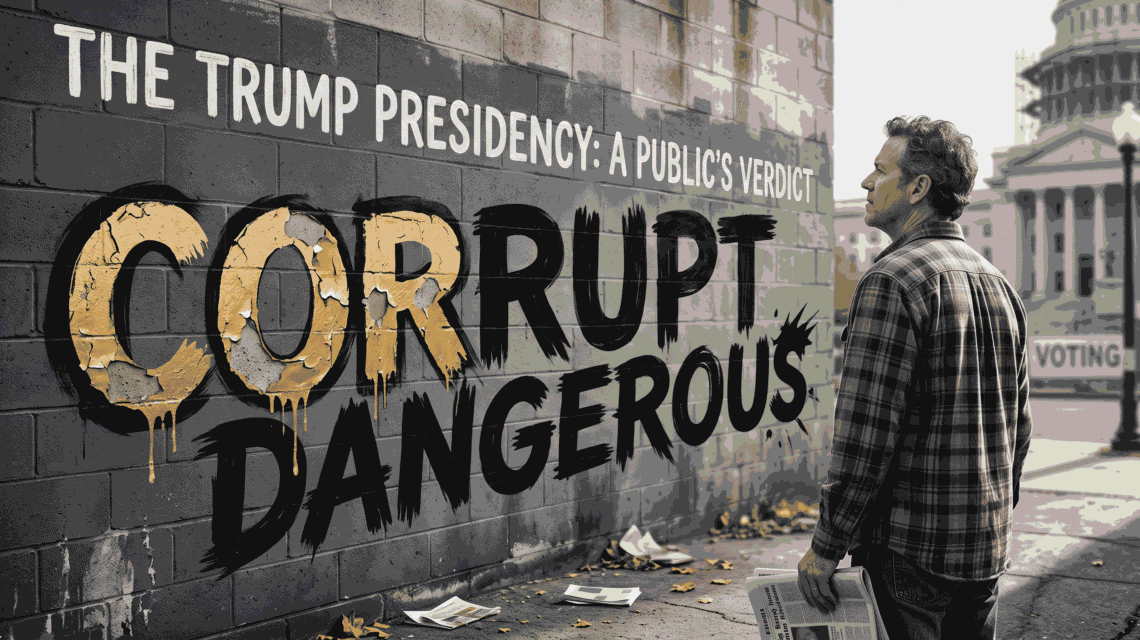
The perception of corruption surrounding the Trump administration is not new, but it still resonates deeply with Americans.
A recent Economist/YouGov poll underscores this enduring sentiment, revealing that a majority of Americans 53% cite “corrupt” as the primary word to describe Donald Trump and his presidency.
This characterisation, alongside “dangerous” (51%) and “out-of-touch” (47%), highlights a profound distrust that extends beyond simple partisan disagreement, striking at the core of how the public views his leadership and financial activities.
When Donald Trump returned to the White House in 2025, the ethical guardrails separating private enterprise from public service were entirely dismantled.
The most glaring example is his sweeping integration of cryptocurrency ventures into the presidency. This move netted him over $1.2 billion in a single year while leaving many of his own investors holding the bag.
The sheer scale of this financial crossover is unprecedented. Through family-backed businesses like World Liberty Financial and his $TRUMP meme coin, the president has directly intertwined his personal wealth with the highly volatile crypto markets he now regulates.
- The Meme Coin Collapse: Launched just three days before his second inauguration, the $TRUMP meme coin soared to over $74 before quickly plummeting to under $2. While regular investors and enthusiastic supporters faced massive losses, Trump’s affiliated company, CIC Digital LLC, secured over $600 million in sales and royalties.
- World Liberty Financial: Trump took in more than $500 million from token sales tied to World Liberty Financial, a company that was launched during his 2024 presidential campaign. Since they started trading, the value of these governance tokens has fallen by 80%.
- Retail Merchandising: Beyond digital assets, Trump has relentlessly monetized his political brand from the Oval Office, earning millions by peddling branded Bibles, gold sneakers, and luxury watches, with watch sales alone generating $4.7 million.
The ethical conflict lies not just in the aggressive retail salesmanship, but in the blatant policy overlap.
By reversing previous federal regulatory crackdowns on the crypto industry while holding hundreds of millions of dollars in its core products, Trump has used his executive authority to foster a market environment that directly enriches his own family.
Furthermore, relying on wealthy foreign buyers for these crypto assets bypasses traditional ethics restrictions, offering a direct avenue for special interests to essentially funnel money into the bank account of a sitting president.
The Financial Nexus of the “Corrupt” Label
The label of “corrupt” does not emerge in a vacuum. It is intrinsically linked to the unprecedented blurring of lines between Trump’s public office and private business interests.
Throughout his presidency, and continuing into his post-presidential activities, Trump’s financial dealings have drawn intense scrutiny.
The decision to retain ownership of the Trump Organization while in office set the stage for conflicts of interest that many argue defined his administration’s approach to governance.
When the public sees foreign dignitaries funneling money into Trump-owned properties or the Secret Service charging premium rates to stay at his resorts, the word “corrupt” shifts from an abstract political insult to a tangible description of self-dealing.
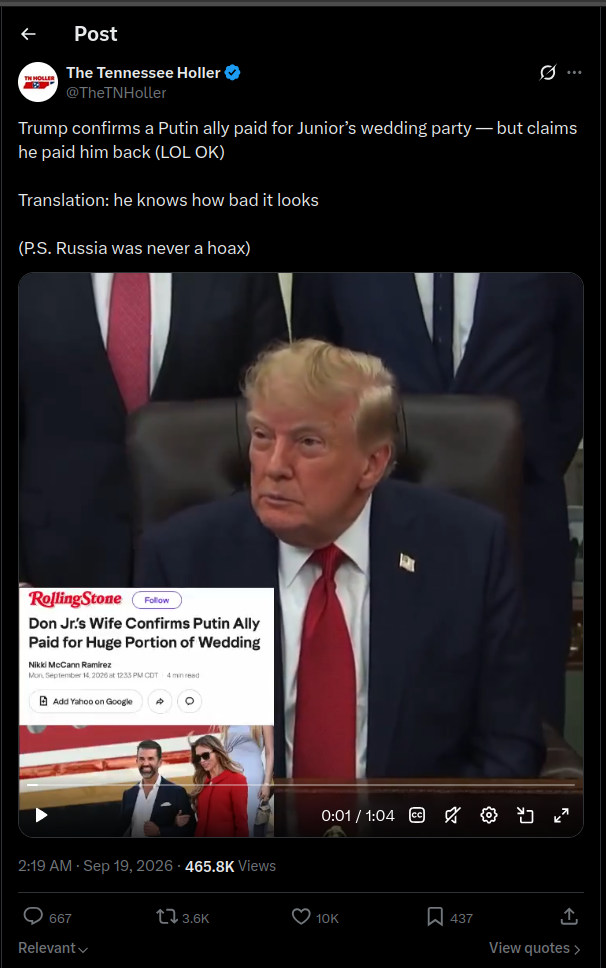
The administration’s approach often appeared transactional, prioritizing personal enrichment over public service. This perception is further fueled by ongoing investigations, such as the probe into whether his son’s private wedding was partially financed by a Russian oligarch, emphasizing the international scope of these concerns.
The Partisan Divide and Public Trust
The polling data reveals a stark partisan divide, which itself is a symptom of a deeply polarized nation. While 91% of Democrats and 62% of independents describe Trump as corrupt, only 10% of Republicans share this view.
Yet even within his own party, enthusiasm for his character is notably subdued; only 49% of Republicans describe him as “honest.” This suggests that even among his supporters, there is a complex, perhaps pragmatic, acceptance of his ethical controversies.
This widespread perception of corruption has devastating consequences for public trust in government.
When a majority views the highest office in the land as self-serving, it erodes confidence in democracy’s foundational institutions.
A broader Gallup survey cited by Axios indicated that 89% of Americans believe corruption is widespread in the federal government—the highest level in two decades.
Trump’s presidency, characterized by many as an “idiocracy regime” or a “kleptocracy,” has significantly contributed to this cynicism.
Wrapping Up
The Trump administration’s legacy is inextricably tied to its financial controversies. From the lack of transparency regarding his tax returns to the numerous lawsuits and investigations into his business practices, the overarching narrative is one of a leader who viewed the presidency not as a public trust, but as a mechanism for personal gain.
The fact that “corrupt” is the most prevalent word used to describe his administration is a damning indictment. It suggests that, despite the political noise and the fervor of his base, most Americans see through the rhetoric to the underlying financial realities.
As the nation moves forward, the scrutiny of Trump’s financial activities remains not just a matter of legal accountability, but a crucial test of whether the American political system can effectively address and deter the commercialization of public office.
Read the news with confidence using our built-in fact-checker.

Download Democracy In View News App
Credits: Vecteezy MS Now The Tennessee Holler