The Trump administration’s decision to bar Politico from the White House has taken an unexpected turn.
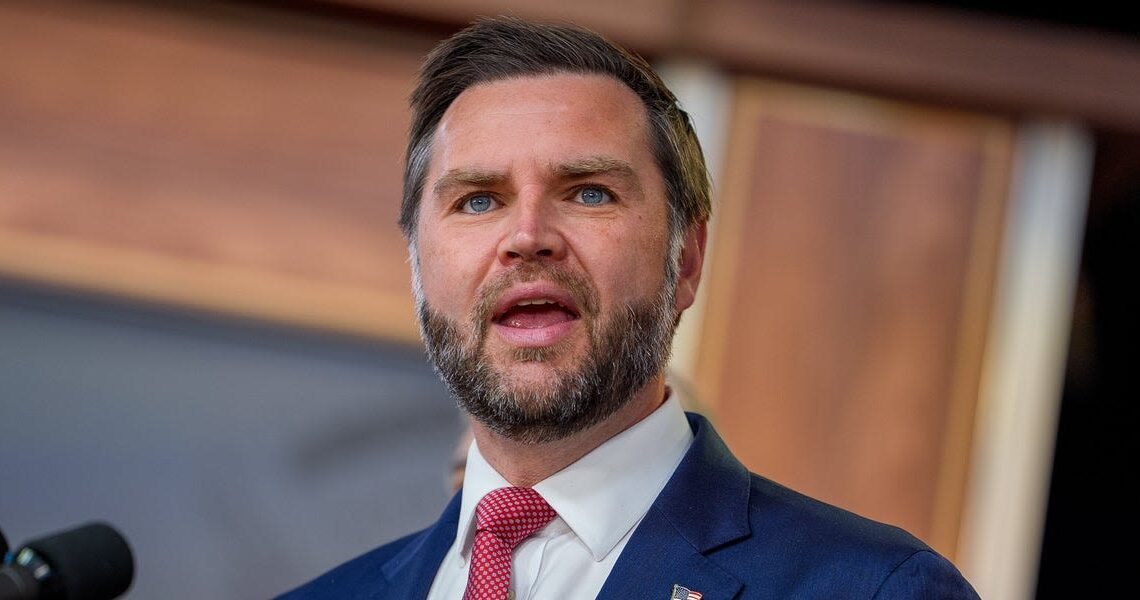
One of the stories the administration cited to justify the exclusion reportedly originated not from an unauthorised leak or an unidentified intelligence source, but from Vice President JD Vance himself.
That identification, first reported by the media newsletter Status and subsequently reported by other outlets, has not been publicly confirmed by the White House. But reporting by The Washington Post independently established that the underlying conversation was a White House-authorized briefing in which journalists were explicitly instructed to attribute the information to a “senior administration official.”
That distinction is at the center of the controversy.
The administration has argued that Politico’s reporting threatened national security and spread false or misleading information. Yet the disputed information was reportedly supplied during an official background call—and several other news organizations reported substantially the same assessment.
The result is a question that now hangs over the White House’s case against Politico: how did information supplied under the administration’s own briefing rules become evidence against the news organization that published it?
The Iran prediction that started the controversy
The episode goes back to June, when the United States and Iran were negotiating to end their conflict.
On June 12, an unnamed senior Trump administration official told reporters that Washington was increasingly confident it could reach an agreement with Tehran. The official estimated the chances of signing a deal at between 80% and 85%.
The official made the comments on a call with journalists under anonymity.
Multiple news organizations reported the estimate at the time. The Washington Post later reported that the White House hosted the briefing and that participating journalists were instructed to identify the speaker only as a “senior administration official.”
According to a recording reviewed by The Post, a White House aide told journalists that the call was on background, attributable to a senior administration official, and that there was no embargo on the information.
Politico subsequently published its own report using the same basic assessment.
The White House later singled out that article as one of six examples of Politico reporting that it said had “threatened national security and/or spread falsehoods.”
Then came the Vance revelation
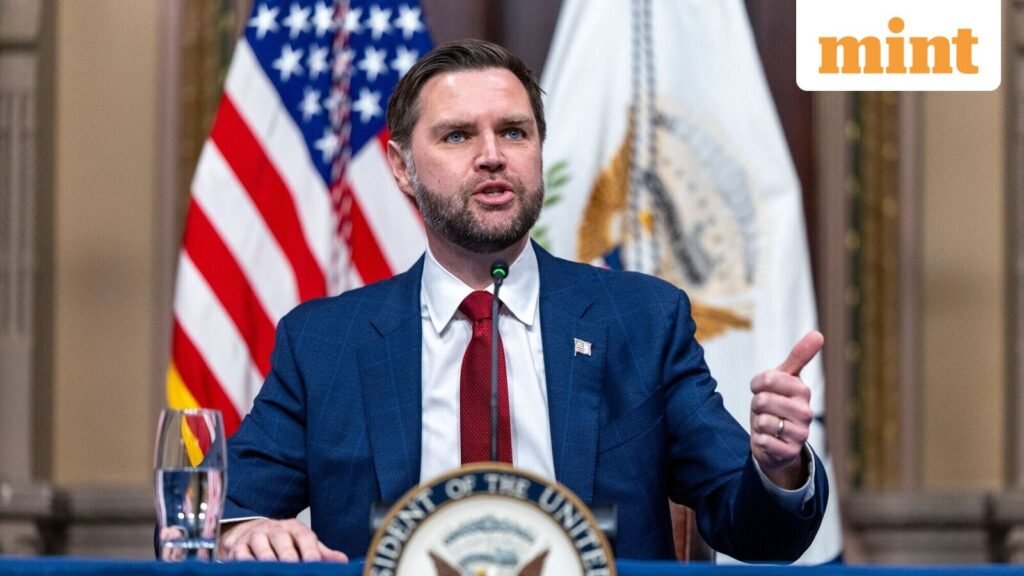
On September 23, Status reported that the anonymous official behind the June briefing was Vice President JD Vance.
According to the report, Vance had spoken to journalists from several news organizations about the negotiations with Iran. The participating journalists agreed to preserve his anonymity.
The Washington Post subsequently reported on the briefing’s ground rules after reviewing the White House invitation and a recording of the call.
That evidence matters because it shows the conversation was not simply an unauthorized disclosure by an unknown government employee.
The White House itself had organized the briefing.
Status’s identification of Vance has since been repeated by other publications, but the White House has not publicly confirmed the identity. The White House declined to comment when asked about the identification.
That means the responsible description at this stage is that Vance was reported to be the source—not that his identity has been officially confirmed.
What did Vance reportedly say?
According to the recording described by The Washington Post, the official told reporters that the United States expected to sign an agreement with Iran within days.
The official explained that the administration’s confidence had risen during the day—from roughly 75% earlier that morning to approximately 80% or 85%.
The statement was notably qualified. The official also emphasized that the situation was not yet certain.
That distinction matters when evaluating what happened next.
Negotiations did not collapse immediately.
On June 14, the United States and Iran reached a preliminary agreement to end the war, according to Reuters. The agreement included provisions concerning the conflict, the U.S. naval blockade and the Strait of Hormuz.
The memorandum was later signed, and Reuters reported that the White House provided the agreement’s text to Congress on June 18.
In other words, the central 80–85% assessment was followed within days by an actual preliminary agreement.
That does not mean every detail reported in connection with the negotiations was correct, nor does it establish that every administration claim was accurate. But it does complicate any simple description of the June report as demonstrably false.
Why did the White House later cite it against Politico?
This is where the controversy becomes more difficult to explain.
After President Donald Trump announced on September 18 that CNN, MS NOW and Politico would be barred from the White House, the administration faced a legal challenge.
In its response, the White House provided a list of reporting incidents it said justified its actions against Politico.
One of them was the June Iran story.
The administration’s letter argued that publishing sensitive security information and misinformation on national-security matters could divert White House and national-security resources and undermine the president’s ability to safeguard national security.
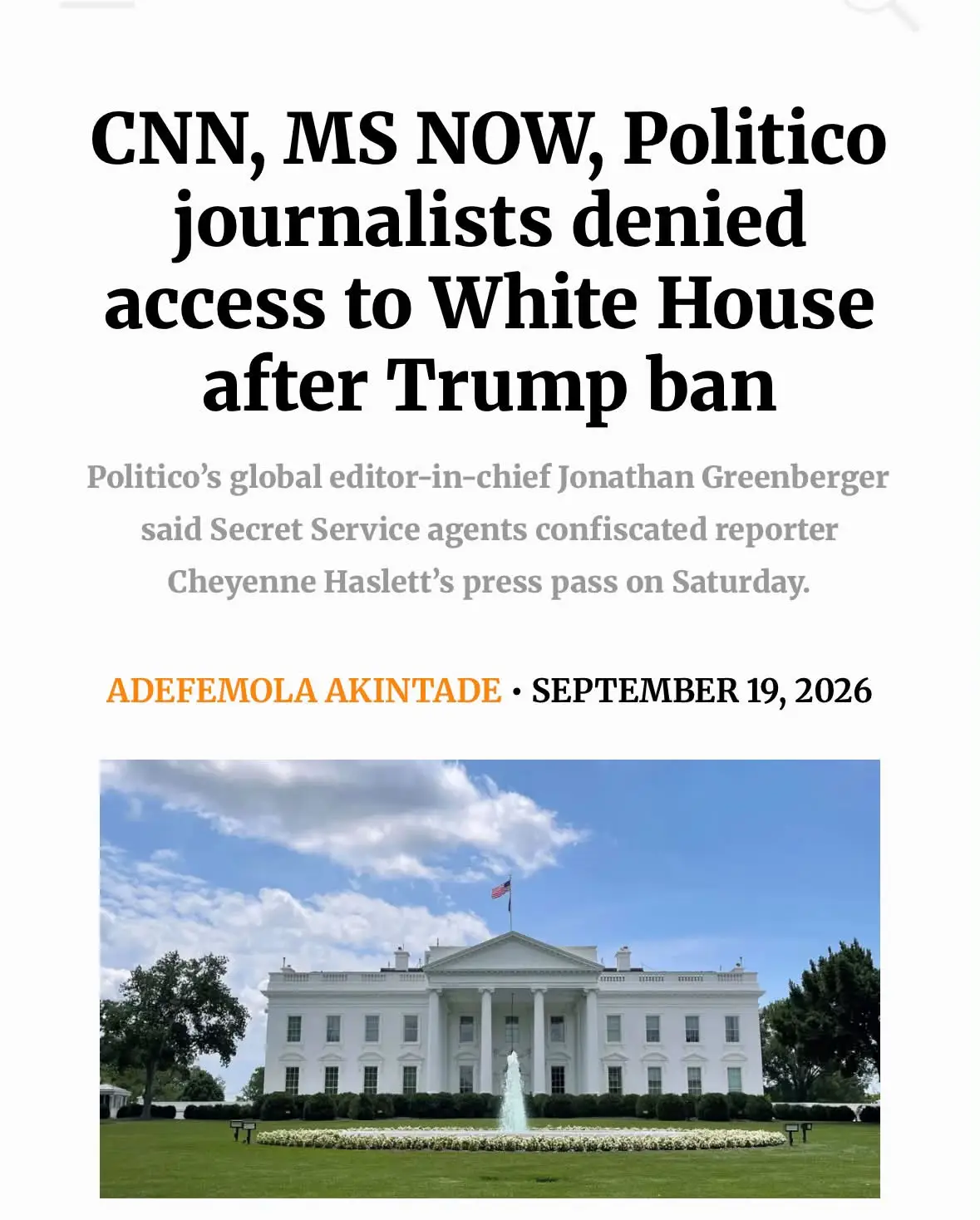
The letter specifically referred to Politico’s report quoting a senior administration official who had placed the probability of a preliminary Iran deal at 80% to 85%.
But the circumstances surrounding the briefing raise an obvious factual question.
If the information came from a White House-authorized briefing, and journalists were explicitly instructed to attribute it to a senior administration official, what precisely made Politico’s publication of that information a national-security violation?
The answer from the administration matters.
It may argue that the problem was not merely publishing the official’s remarks but how Politico presented or characterized them. It may also argue that information permissible to disclose under briefing rules could still have been misleading, damaging, or improperly handled.
Those distinctions need to be established, not assumed.
Politico was not the only outlet to report the information
Another important part of the story is that Politico was not alone.
The Associated Press, Bloomberg, and CNBC were among the outlets that also reported information from the same anonymous senior official. AFP likewise published the 80–85% assessment.
Those organizations were not included in the September White House ban.
That does not necessarily prove that Politico was treated differently solely because of this particular story. The White House cited multiple articles and broader concerns to justify the ban.
But it makes the administration’s treatment of the June report an important question in the wider dispute.
If the information itself was considered a national-security threat, why were multiple organizations able to publish substantially similar information without facing the same consequence?
And if the problem was instead something specific to Politico’s presentation, the administration would need to explain what that difference was.
The White House and Vance face different questions
There are actually two separate issues here.
The first concerns the administration’s treatment of Politico.
The second concerns Vance’s role.
Even if Vance was the anonymous official, that does not automatically mean he violated a classification rule or improperly disclosed protected information.
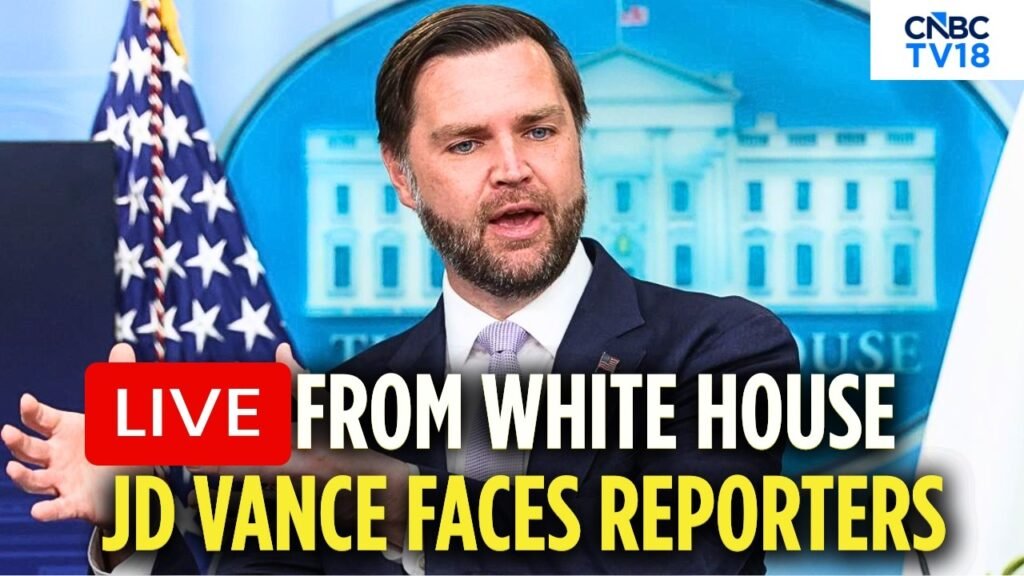
Available reporting indicates the White House authorized the call and governed it under explicit attribution rules.
Several other outlets also reported the information.
Therefore, the evidence currently available does not establish that Vance leaked classified information.
Instead, the more concrete question is whether the administration later characterized the publication of information from its own authorized briefing in a manner consistent with the rules under which the briefing was conducted.
That is a question of evidence, not political loyalty.
The legal battle changes the stakes
The dispute has now moved beyond a fight between Trump and the press.
CNN, MS NOW, and Politico sued the administration in federal court, arguing that excluding them from the White House violated constitutional protections.
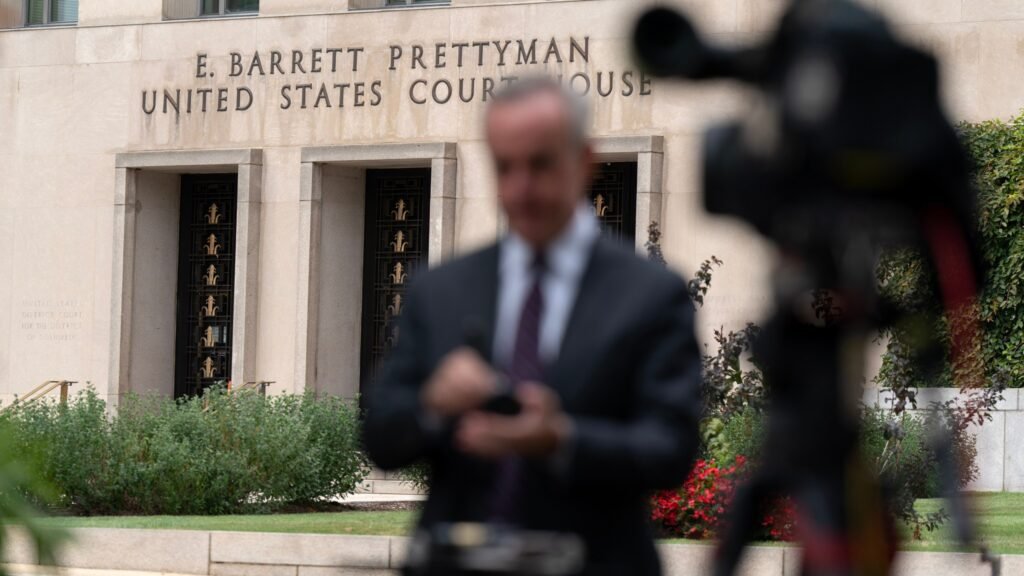
The case, Cable News Network, Inc. v. Trump, was assigned to U.S. District Judge Timothy Kelly.
On September 24, Kelly issued a temporary restraining order requiring the administration to restore the outlets’ White House press credentials for 14 days while the litigation continues.
The ruling was significant because Kelly found that the plaintiffs had shown a likelihood of succeeding on their Fifth Amendment procedural due-process claim.
The judge also expressed skepticism about the administration’s national-security justification.
Under the ruling, the government provided little evidence linking the reporters’ possession of White House credentials to actual damage to national security. Kelly also noted that the government’s declarations concerning classified information did not establish direct knowledge of how the reporters operated or how the specific reporting at issue caused national-security harm.
The order did not finally decide the First Amendment questions or determine whether the administration’s underlying claims were true.
It was a temporary ruling while the larger case proceeds.
But it means the White House’s rationale will receive considerably more scrutiny.
What the evidence shows—and what it doesn’t?
The available evidence establishes several important facts.
The White House hosted the June briefing.
Journalists received explicit instructions on anonymity and attribution.
Multiple organizations later published the information about the 80–85% likelihood of an Iran deal.
The White House later identified Politico’s publication of that information as one of the incidents it considered problematic.
Status subsequently identified the anonymous official as JD Vance.
The White House has not publicly confirmed that identification.
The United States and Iran then reached and signed a preliminary agreement within days of the original forecast.
And, in September, the White House excluded Politico from its grounds while defending the decision partly by pointing to the June report.
What remains disputed is whether the June reporting actually constituted a national-security violation, whether Politico’s treatment of the information differed materially from other outlets, and what precise reasoning led the administration to regard that particular article as problematic.
Those questions should not be answered by political allegiance alone.
They require evidence.
A broader question about press access
The Vance episode also highlights a larger problem in the relationship between government officials and journalists.
Governments routinely provide information to journalists under different conditions: on the record, on background, anonymously, or under embargo.
Those arrangements allow officials to communicate information while retaining varying degrees of control over attribution.
But they also create expectations.
When a government invites journalists to a briefing, sets the ground rules, and later cites reporting based on that briefing as evidence against publication, the rules governing that interaction become critically important.
The Vance episode therefore raises a question that extends beyond one vice president or one news organization:
Can journalists safely report information provided under government-approved briefing rules if the administration can later characterize the resulting coverage as a threat to national security?
The answer will depend partly on what the courts ultimately decide.
For now, the record presents an unusual sequence: an administration official reportedly gave journalists an assessment during a White House-authorized briefing; the information was reported; the administration later cited one publication of that information against the outlet; and a federal judge has temporarily restored the outlet’s access while questioning whether the government’s process and national-security rationale were constitutionally sufficient.
That does not settle the broader dispute.
But it ensures that the question surrounding JD Vance’s reported role is no longer simply about an anonymous source.
It is about who provided the information, under what rules, how it was reported—and why the same information later became part of the government’s case against the press.