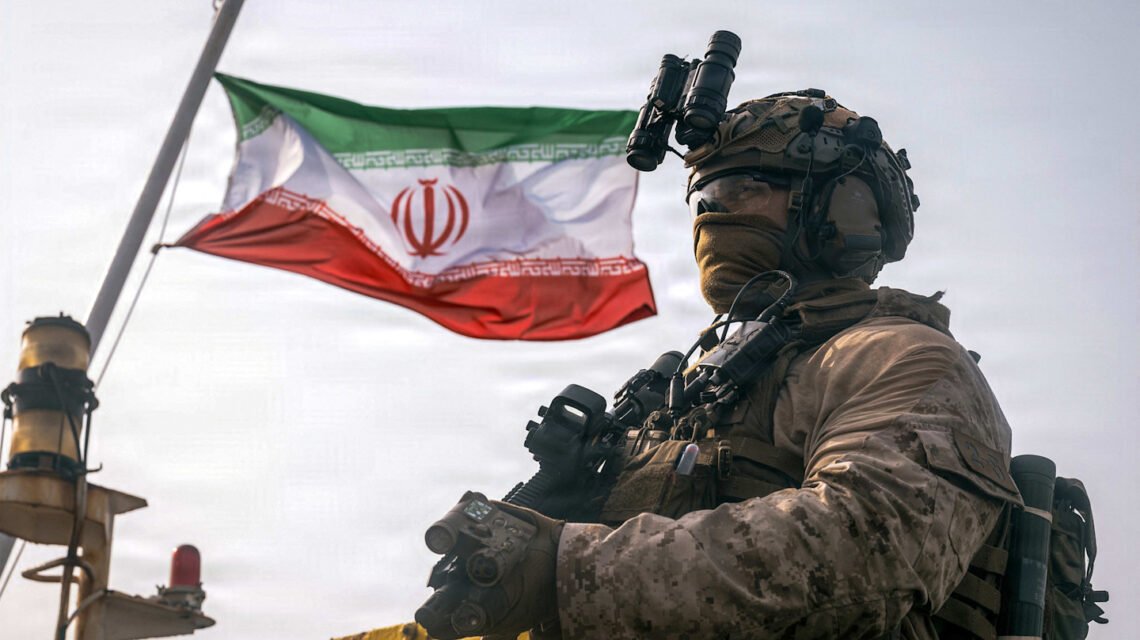
As the conflict enters its seventh month, a reported discrepancy in U.S. military deaths is raising fresh questions about transparency, accountability, and the human cost of the war.
•The Events That Sparked the Crisis
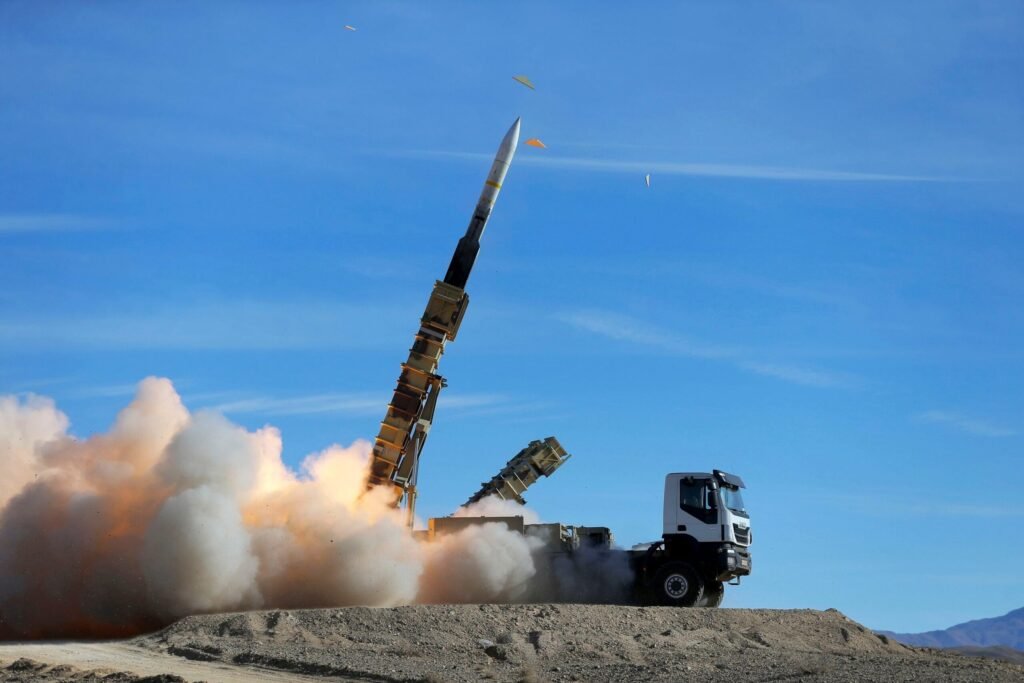
The Pentagon’s public casualty database listed 18 U.S. military fatalities from the beginning of the Iran conflict through September 18, 2026.
But that may not be the full number.
Five U.S. officials familiar with the Defense Department’s internal casualty accounting told The Washington Post that at least 22 American service members had died since the war began on February 28. A sixth official gave the figure as 23. The officials spoke anonymously because they were discussing internal information. They also cautioned that not all of the additional deaths were necessarily direct combat deaths; some involved American personnel stationed in the Middle East during the wider conflict.
The distinction is important. A difference of four or five deaths is not simply a statistical disagreement when those numbers represent people who died while serving in a war zone. The Washington Post reported that casualty classification can also affect line-of-duty determinations and, consequently, benefits available to surviving families.
The Pentagon has rejected the report.
Defense Secretary Pete Hegseth responded to the Washington Post story by calling it “DISGUSTING and FAKE” and “a complete LIE.” Reuters also reported that the Pentagon did not substantively address the discrepancy when questioned about the Post’s findings.
That leaves a central question unanswered: why does the Pentagon’s public database show 18 deaths while multiple U.S. officials familiar with internal accounting say the number is at least 22?
There is another reason the question matters. This isn’t the first controversy over casualty reporting during the conflict.
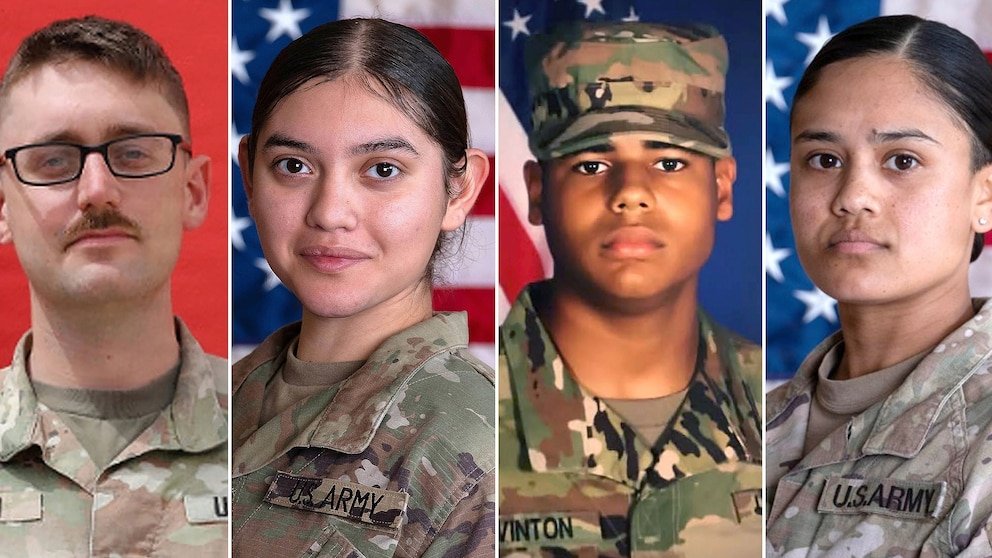
In July, four service members who had been killed were temporarily absent from the Pentagon’s public casualty database even though the Defense Department had separately announced their deaths. Officials attributed that earlier discrepancy to technical problems.
The issue therefore goes beyond a single database entry. It concerns how the U.S. government records the human cost of a war fought in the name of American national security.
BY THE NUMBERS:
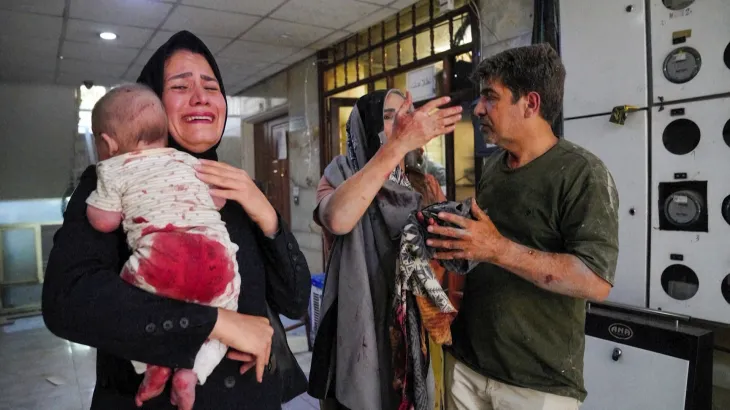
18 — U.S. military deaths listed publicly by the Pentagon as of September 18.
22 — Minimum number reported by five U.S. officials familiar with internal Pentagon accounting.
23 — Number given by a sixth U.S. official.
More than 830 — U.S. service members reported wounded by September 3, according to updated military estimates reported by the Associated Press.
$43.6 billion — Updated U.S. military estimate for the cost of the conflict through September 3.
$38 billion — Congressional Budget Office estimate of Department of Defense costs through August 1.
$3 billion per month — Approximate additional cost projected by CBO depending on the intensity of combat.
150+ — People the UN fact-finding mission said were killed in the February strike on a school in Minab, including about 120 children.
•The Timeline of Events
The current crisis began on February 28, 2026, when the United States and Israel launched military operations against Iran.
The Trump administration named the U.S. campaign Operation Epic Fury.
According to the White House, President Donald Trump ordered the operation with objectives that included destroying Iran’s ballistic missile and drone capabilities, damaging its naval forces and defense-industrial base, weakening its support for armed proxy groups, and preventing Iran from obtaining a nuclear weapon.
The administration subsequently described the campaign as a successful military operation. The White House said the initial major combat phase lasted 38 days and claimed it had achieved its military objectives.
But the conflict did not simply disappear after that initial phase.
U.S. forces remained involved, Iranian retaliation continued, and the conflict produced casualties and damage across the Middle East.
By June, Congress had begun using its War Powers authority to seek an end to U.S. hostilities with Iran. The House passed a resolution on June 3 directing the president to remove U.S. forces from hostilities unless Congress authorized the conflict. The House later passed another such resolution on July 23 by a vote of 214-208. The House passed a further resolution on September 15 by 220-204.
Those votes demonstrate that the conflict was not simply a military question. It became a constitutional and political dispute over who has the authority to sustain American hostilities.
Meanwhile, casualty accounting became another point of controversy.
By September 18, the Pentagon’s public database showed 18 deaths. But the Washington Post reported that six officials familiar with internal accounting placed the number at 22 or 23.
On September 16, Trump said he hoped the conflict was nearing an end. Yet Reuters reported on September 20 that tensions were again escalating, with Iran and the United States trading threats and the wider regional conflict continuing.
Seven months after the opening strikes, the war therefore remains unfinished—and its human and financial bill continues to change.
•The Geography of the Conflict
The war has not been confined to Iran.
U.S. forces have operated throughout a broad Middle Eastern theater, while Iranian retaliation has reached countries hosting American military personnel.
American troops have been killed or wounded at locations including bases in Jordan and elsewhere in the region.
One particularly significant attack occurred at a U.S. base in Jordan, where Iranian strikes caused American casualties. The conflict has also damaged U.S. military facilities across countries including Kuwait, Bahrain, and Saudi Arabia, according to a U.S. government watchdog report covering April through June.
The geographical spread of the conflict matters because American personnel can become casualties even when they are not directly fighting inside Iran.
That is also relevant to the current casualty dispute.
The six U.S. officials cited by the Washington Post said some deaths included personnel stationed in the Middle East whose deaths were not necessarily caused directly by Iranian attacks.
Iran itself has suffered a vastly larger reported human toll.
The UN fact-finding mission investigating the conflict said there were reasonable grounds to believe U.S. strikes on civilian sites in Iran constituted violations of international humanitarian law.
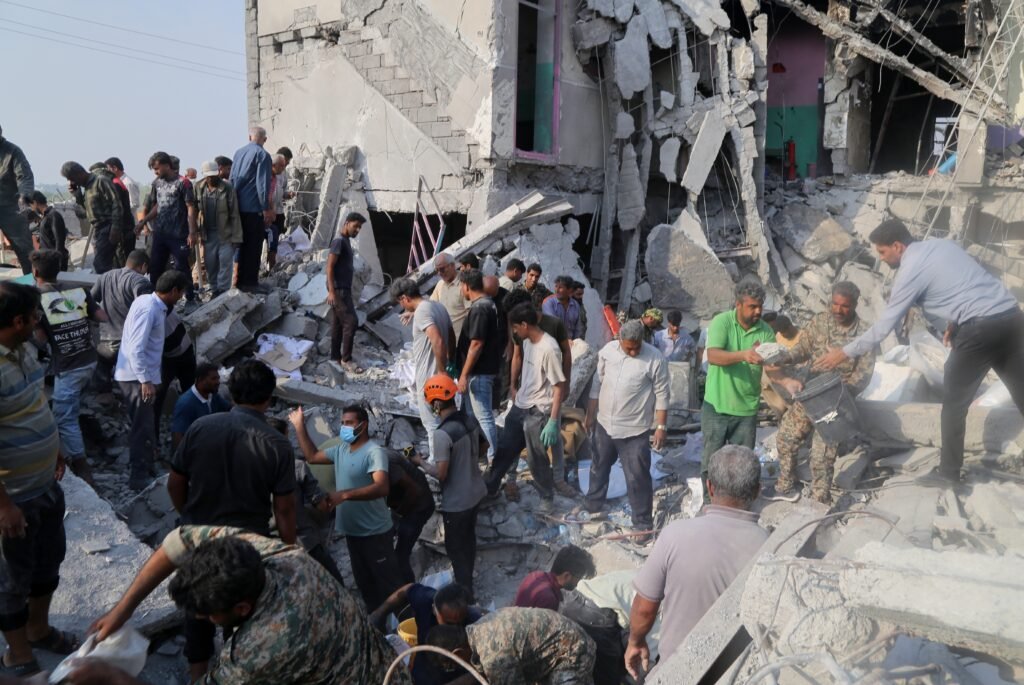
Among the most serious incidents was a strike on the Shajareh Tayyebeh Primary School in Minab. Reuters reported that the UN mission found the attack killed more than 150 people, including approximately 120 children. The mission also cited a strike in Lamerd that caused 22 civilian casualties.
The UN findings are allegations and conclusions of a fact-finding body, not a criminal conviction. But they are among the most serious international findings concerning the conduct of the war.
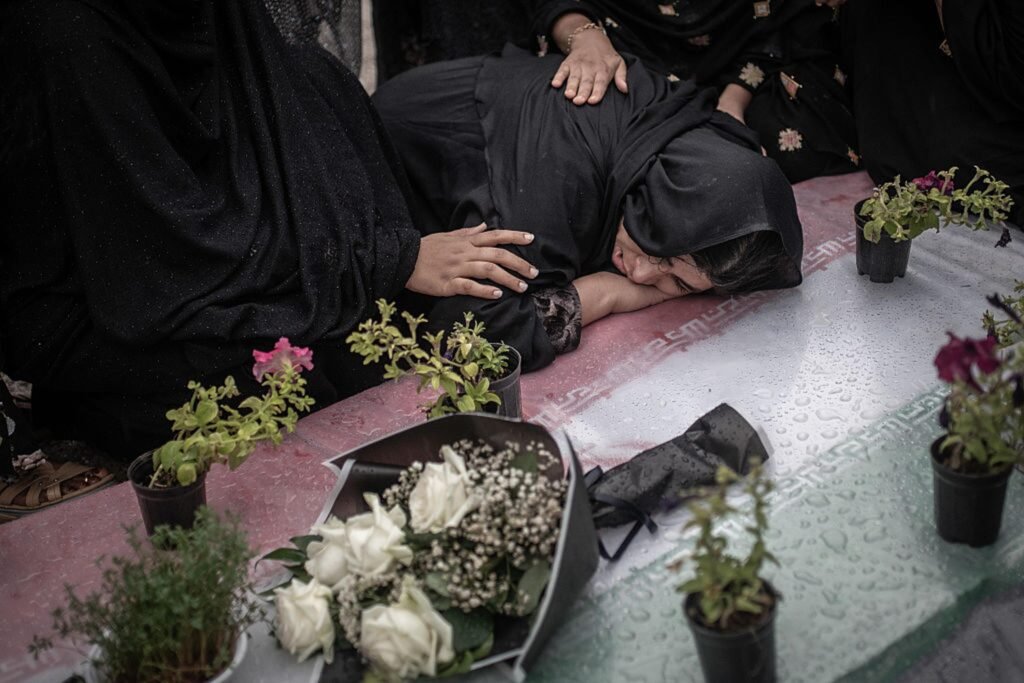
And they underscore a basic reality of modern warfare: casualty statistics are not merely numbers. Behind every number is a family, a community, and a life permanently altered.
•Understanding the Root Causes
The Trump administration’s stated justification for the war centers on Iran’s nuclear ambitions, ballistic missiles, military capabilities, and support for armed groups in the region.
The White House said Iran represented an “unusual and extraordinary threat” to American national security and argued that military action was necessary to prevent Iran from obtaining a nuclear weapon.
The administration also pointed to Iran’s support for regional proxy groups and previous attacks against U.S. personnel.
The White House maintains that the military campaign followed extensive diplomatic efforts and was necessary to address what it characterized as an imminent and serious threat.
That is the administration’s case.
But the existence of a stated national-security justification does not end the debate over whether war was necessary, proportionate, or the only available option.
The Congressional debate shows that lawmakers sharply disagreed about whether the president had sufficient authority to continue hostilities.
Some lawmakers argued that the president had exceeded constitutional and statutory limits. Others supported the administration’s position that the military action was necessary to protect American interests and security.
The disagreement is important because the question is not simply whether Iran posed threats to the United States. Iran’s government has a documented record of supporting armed groups and developing significant missile capabilities. The question is whether the specific decision to launch and sustain a major war was the appropriate response—and whether the costs that followed were foreseeable.
That question remains contested.
•Could the Crisis Have Been Averted?
No simple historical test can prove what would have happened if the United States had chosen another path.
But concrete reasons exist to examine the alternatives.
The Trump administration says diplomacy was attempted and that Iran failed to reach an agreement acceptable to Washington. The White House portrays military action as the culmination of pressure and negotiations, not the first option.
Critics in Congress have disputed that interpretation, arguing that the administration entered a war without the congressional authorization they believed the Constitution and War Powers Resolution required.
The subsequent congressional votes are significant.
The House voted repeatedly to direct the president to end hostilities unless Congress authorized continued military action. Those votes did not settle the constitutional dispute, but they show that many elected representatives believed an alternative course was available: ending offensive operations and returning the decision to Congress.
Diplomacy also offered opportunities after the conflict began.
Trump himself said in September that he hoped the war was approaching its end, while Reuters reported renewed diplomatic possibilities alongside continuing threats.
The record therefore does not support the simplistic claim that war was either obviously unavoidable or obviously avoidable.
What we can say is that choices were made.
Leaders chose military action.
Leaders chose the scale of that action.
Leaders chose how long to continue it.
And officials chose how casualty information would be classified and communicated.
Those decisions can be examined even without pretending that historians can know with certainty what an alternative path would have produced.
THE COST OF WAR IS NO LONGER ABSTRACT
The Congressional Budget Office estimated that U.S. Department of Defense costs had reached approximately $38 billion by August 1. CBO said those costs included replacing expended munitions and equipment lost in battle, increased flying hours, operations, and fuel costs. It estimated that the conflict could continue costing roughly $3 billion per month, depending on combat intensity.
An updated estimate reported by the Associated Press put the military cost at $43.6 billion as of September 3. The increase reflected billions of dollars in additional weapons expenditure. AP also reported that more than 830 American service members had been wounded.
These figures reveal a second dimension of the war.
The United States is not simply paying in military casualties.
It is paying in ammunition, aircraft, missiles, fuel, damaged infrastructure, medical care and military readiness.
The CBO has warned that the conflict’s weapons expenditure and replenishment requirements have created additional pressure on U.S. stockpiles.
That raises another accountability question:
What exactly was the United States prepared to spend—and for how long—when the war began?
THE HUMAN COST IN IRAN
The disparity between American and Iranian casualties is enormous.
Common Dreams, citing Iranian and international officials, reported that thousands of Iranians had been killed since February 28, including more than 3,500 civilians and more than 380 children.
Those figures should be treated carefully because casualty accounting during an active war is difficult and competing authorities may produce different estimates.
But the UN’s investigation provides independently significant evidence of civilian harm.
The UN fact-finding mission said the Minab school strike killed more than 150 people, including around 120 children, and concluded that there were reasonable grounds to believe the United States had committed war crimes in connection with strikes on the school and a sports facility.
Those are extraordinarily serious findings.
They should not be used to conclude that every U.S. military operation violated international law. But neither should they be dismissed merely because they are politically inconvenient.
If civilian sites were struck without adequate verification of military targets, as the UN mission concluded, that deserves independent scrutiny and accountability.
•Where Does Responsibility Lie?
Responsibility in a war does not belong to a single person.
But responsibility also cannot disappear into the word “government.”
Donald Trump
As president and commander in chief, Trump authorized Operation Epic Fury.
The White House has repeatedly defended the decision, arguing that Iran represented a serious national-security threat and that military action achieved its stated objectives.
That makes Trump’s decisions central to any assessment of the war.
The president had the authority to direct military operations. With that authority came responsibility for the consequences of those decisions—including American casualties, civilian casualties, military expenditures, and the continuation of hostilities.
The administration’s defenders can point to its stated objectives and military claims of success.
Its critics can point to the casualties, financial cost, congressional objections and continuing instability.
Both parts of that record should be visible to the public.
Pete Hegseth and the Pentagon
Defense Secretary Pete Hegseth oversees the Department of Defense and has been one of the administration’s most prominent defenders of the military campaign.
He has also become central to the casualty-reporting controversy.
After the Washington Post reported that six U.S. officials believed at least 22 service members had died, Hegseth rejected the report as false.
That response creates an obvious accountability test:
If the Post’s reporting is wrong, the Pentagon should provide evidence demonstrating why.
If the Pentagon’s public figure is incomplete, officials should explain why.
Either way, the public deserves an accurate accounting.
The earlier July episode makes the issue more difficult to dismiss as a one-time misunderstanding. Four deaths were temporarily absent from the Pentagon’s public database even though the Defense Department had separately announced them; officials attributed that discrepancy to technical problems.
Congress
Congress also carries responsibility—not necessarily for initiating the war, but for exercising its constitutional oversight role.
The House repeatedly passed War Powers resolutions directing the president to remove U.S. forces from hostilities with Iran unless Congress authorized continued military action.
Some lawmakers have also sought legislation requiring more accurate casualty reporting.
Senator Tammy Duckworth and 17 Senate colleagues introduced the Honoring the Sacrifices of Our Troops in War Act, which would prohibit certain forms of casualty-record manipulation and require restoration of Iran-related casualty records and associated benefits where applicable.
The bill itself is a proposal, not proof that the Pentagon deliberately manipulated records.
But its introduction demonstrates that the dispute has moved beyond journalism and into formal congressional oversight.
TRANSPARENCY IS PART OF THE COST
The most troubling feature of the casualty controversy may ultimately be what remains unknown.
If there are 18 deaths, the Pentagon should be able to explain the number.
If there are 22, it should explain why it did not include four deaths.
If there are 23, the discrepancy becomes even larger.
And if the difference results from legitimate classification rules—for example, deaths that occurred among personnel in the region but were not caused directly by combat—the government should explain those rules clearly.
That is what transparency looks like.
The public should not have to rely on anonymous officials to determine how many Americans have died in a war conducted in their name.
Nor should families of fallen service members have to wonder whether their loved ones’ deaths are being properly recorded.
A WAR CAN BE JUDGED BY MORE THAN ITS BATTLEFIELD CLAIMS
The Trump administration has described Operation Epic Fury as a military success.
That is one part of the record.
But military success is not the only measure by which a war can be examined.
There is also the number of people killed.
The number wounded.
The financial cost.
The depletion of military resources.
The damage to civilian infrastructure.
The effect on regional stability.
The constitutional questions surrounding the use of military force.
And the quality of information provided to the public.
The Congressional Budget Office has placed the direct Defense Department cost at $38 billion through August 1, while a later military estimate put the figure at $43.6 billion through September 3. More than 830 American service members have reportedly been wounded, while the Pentagon publicly lists 18 deaths and U.S. officials cited by the Washington Post say the actual number may be at least 22.
Those numbers tell a story even before politics enters the discussion.
THE QUESTION THAT REMAINS
Seven months into the Iran war, the most important question may no longer be simply who won a particular battle.
Wrapping up
The central question is whether the United States is being given a complete account of what this war has cost.
The administration says the military campaign was necessary to confront a serious Iranian threat. Critics argue that the war was avoidable, insufficiently authorized by Congress, and enormously costly. The United Nations has raised grave concerns about civilian harm, while Congress has repeatedly challenged the continuation of hostilities. The Pentagon, meanwhile, disputes reporting that its public casualty figures understate American deaths.
And the war continues.
Whatever one’s view of the decision to fight, the public has a right to know the facts. American service members killed in the conflict deserve to be counted accurately. Those wounded deserve proper recognition and benefits. Civilian deaths deserve to be acknowledged. And the billions of dollars spent on the war deserve scrutiny.
The administration may defend the decision to fight and argue that its objectives justified the cost. But those arguments cannot substitute for transparent accounting.
The numbers are not the whole story. But without accurate numbers, the public cannot begin to understand the full cost of the story being written in its name.